
Imago
Credits: Imagn
Imago
Credits: Imagn
For Sydney Colson, the WNBA’s deadlocked CBA negotiations aren’t just about numbers on a spreadsheet. They’re about legacy, leverage, and whether today’s players are willing to honor the women who built the league by standing firm now. As talks continue to stall months after beginning in October 2024, the Fever veteran has emerged as one of the clearest voices urging unity—and patience—at a critical moment for the sport.


Colson has been especially vocal as the calendar inches toward the May 8 season opener. Appearing on We Need To Talk with Alicia Jay, she framed the negotiations as a test of collective resolve rather than a short-term fight for raises. Her message to fellow players was direct and uncomfortable: understand the moment in history you’re in, and don’t cave simply because silence drags on from the other side.
Watch What’s Trending Now!
“I want for players to understand the moment that is in front of us,” Colson said, later distilling her stance into a blunt warning: “Don’t cave in a negotiation where you’re not even hearing anything back.” The point wasn’t abstract. It was rooted in the widening gap between what players are asking for and what the league has put on the table.
That gap is stark. The WNBPA is pushing for an average salary of roughly $800,000 per year, while the WNBA’s counter sits closer to $530,000—a difference of about $270,000. Under the current structure, even the league’s top earners like Kelsey Mitchell, Jewell Loyd, and Arike Ogunbowale make just under $250,000 annually. At the other end, recent top draft picks such as Rookie of the Year Caitlin Clark earn around $78,000. The disparity underscores why Colson believes maintaining leverage matters more than impatience.
Frustration has only grown with the league’s pace. At a key meeting in early February, league officials acknowledged they did not have a proposal ready—an admission that set a discouraging tone. Seattle Storm forward Nneka Ogwumike summed it up plainly: “They volunteered that they did not have a proposal prepared at the top of the meeting.” For players who had already submitted a proposal back in December, the lack of response reinforced the sense of stagnation.
Roughly 40 players and executive committee members joined that meeting via video conference, the first substantive discussion in months. Since then, little has changed. Players have already authorized a strike, and while no one is eager for a work stoppage, it remains a real possibility if progress doesn’t come soon. Beyond revenue sharing, unresolved issues include housing, rookie compensation, and mental health support—areas where players argue growth on the court hasn’t been matched by investment off it.
Caitlin Clark Steps Into the Spotlight With a Message
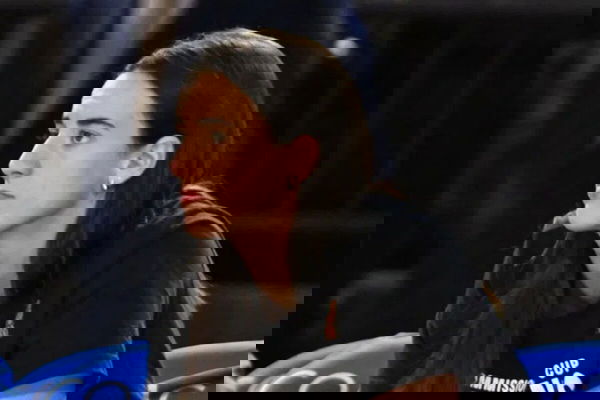
While Colson has pushed a legacy-first call to action, Clark has added a different—but complementary—note to the conversation. On February 1, she traded her Fever jersey for a headset, making her national TV analyst debut on Basketball Night in America from Madison Square Garden. Clark didn’t shy away from the labor standoff, instead framing it as a defining moment far bigger than one league.
Imago
IMAGN
“Honestly, I don’t think it’s just a big moment for the WNBA. I think all of women’s sports,” Clark said. “This is one of the biggest moments we’ve ever had. I feel very confident that we’re going to get something done.” Her confidence offered a counterbalance to the frustration, suggesting belief in both the product and the players’ collective power.
That balance captures where the negotiations stand now: tense, stalled, but not hopeless. The schedule for the 2026 season is already set, yet everything hinges on whether the league responds meaningfully to the union’s demands. For Colson, holding the line is about respect for the past. For Clark, it’s about protecting the future. Together, their voices reflect a league at a crossroads—one where the next move could shape the WNBA for decades to come.
Written by

Edited by

Ved Vaze