USA Today via Reuters
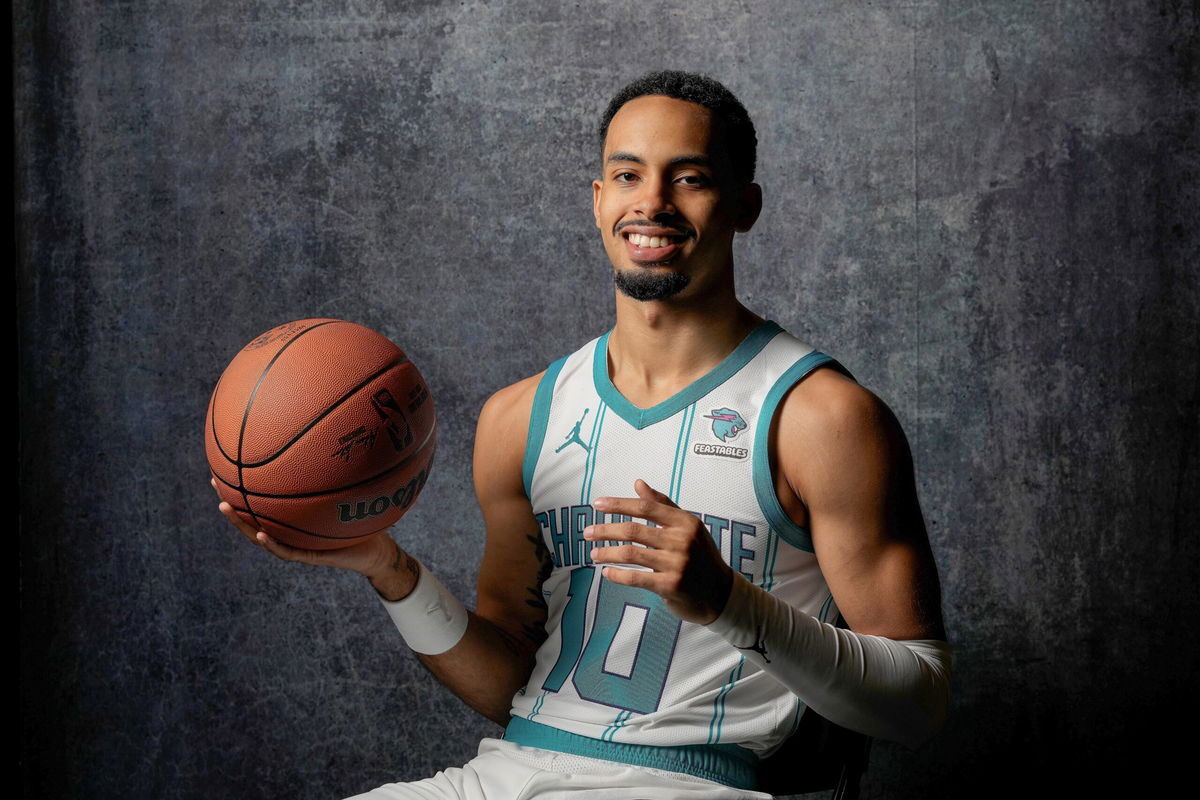
Oct 2, 2023; Charlotte, North Carolina, USA; Charlotte Hornets Amari Bailey (10) poses for a photo during Charlotte Hornets Media Day at the Spectrum Center. Mandatory Credit: Jim Dedmon-USA TODAY Sports
USA Today via Reuters
Oct 2, 2023; Charlotte, North Carolina, USA; Charlotte Hornets Amari Bailey (10) poses for a photo during Charlotte Hornets Media Day at the Spectrum Center. Mandatory Credit: Jim Dedmon-USA TODAY Sports
The lines around college eligibility are no longer clean. And right now, they are being tested in ways the NCAA never fully prepared for.

Former NBA draft pick Amari Bailey is pushing for a return to college basketball after time in the NBA and the G League. While his case has not yet been resolved, it has already reopened a debate about how much control the NCAA still holds in a post-NIL world. According to college basketball insider Seth Davis, the issue is not chaos, but a gray area created by years of legal pressure.
Watch What’s Trending Now!
“The system is broken. The system deserved to be broken,” Davis said. “College sports is not in a crisis. College sports is in a disruption.”
Davis traced the current uncertainty back to the period when NCAA restrictions on athlete compensation were ruled illegal. Those rulings determined that long-standing policies suppressed competition and harmed athletes financially.
Since July 2021, the introduction of NIL rights has further weakened the NCAA’s ability to enforce blanket restrictions. Players can now earn through endorsements and social media, and the old guardrails no longer function the way they once did.
As a result, eligibility disputes no longer play out strictly inside NCAA channels. “Basically, what Amari Bailey is doing… is that all you need is one judge,” Davis explained. “They don’t have to decide the merits of your argument.”
That loophole, according to Davis, allows players to delay final rulings long enough to change outcomes entirely. To illustrate how the process works, Davis pointed to Charles Bediako. Through restraining orders and injunctions, cases can be stalled until the season is already underway. By the time a final decision arrives, the damage or advantage is already done.
Bediako has already played two games for Alabama Crimson Tide and was cleared to play a third against Florida. That outcome has not gone over well with the opposing side.
Florida Pushes Back on Amari Bailey’s Loophole
Florida head coach Todd Golden made it clear that the justification behind Bediako’s eligibility does not sit right. “It’s only ridiculous because of the declaration of the draft and staying in and signing contracts,” Golden said. Florida forward Thomas Haugh echoed that frustration.
“That’s like insane that we’re sitting here talking about college players from the NBA,” Haugh said. “It’s definitely not right.” The NCAA’s rulebook explicitly prohibits players from competing in college basketball after declaring for the NBA Draft. In Bediako’s case, that rule was bypassed, leaving opponents feeling blindsided.
Imago
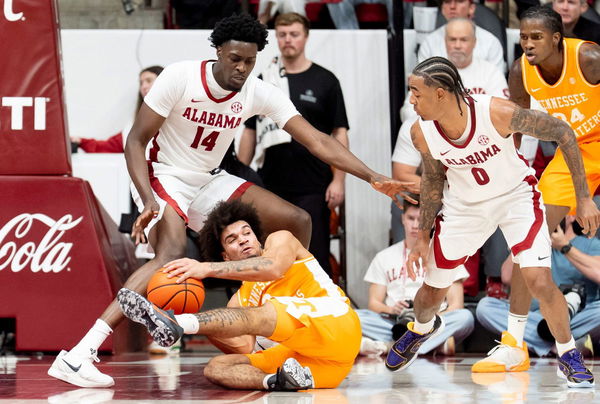
Jan 24, 2026; Tuscaloosa, AL, USA; Tennessee guard Ja’Kobi Gillespie (0) goes to the floor to save a ball in front of Alabama center Charles Bediako (14) and Alabama guard Labaron Philon Jr. (0) at Coleman Coliseum. Mandatory Credit: Gary Cosby Jr.-Tuscaloosa News
Beyond the legal debate, Bediako’s presence has tangible on-court consequences. The 7-foot, 225-pound center has averaged 13.5 points and 4.5 rebounds in his two appearances so far, giving Alabama a clear physical edge in the paint.
Florida, meanwhile, must now prepare for a matchup that did not appear possible weeks earlier. Still, Golden has not backed down from the challenge. “We’ll beat them anyways,” Golden said, underscoring his confidence despite the circumstances.
Bailey’s situation remains unresolved, but the pathway is now visible. Injunctions, delayed rulings, and judicial gray zones have created a landscape in which former professionals can realistically pursue college returns.
That reality represents a significant shift. The NCAA is no longer the final authority in eligibility disputes, and competitive balance now hinges on legal timing as much as rule interpretation. For Bailey, the door is not yet open. But for college basketball as a whole, it already is.
Written by

Edited by

Ved Vaze