Imago
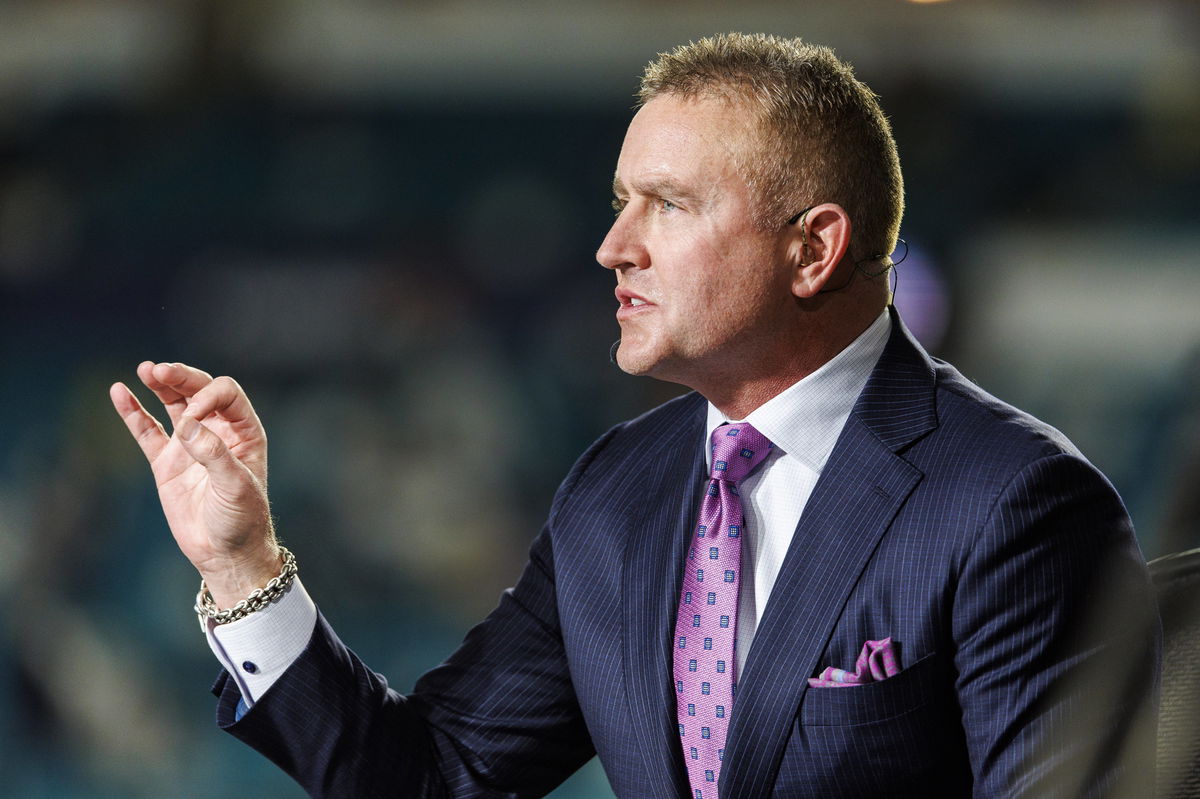
NCAA, College League, USA Football 2025: College Football Playoff Semifinal Capital One Orange Bowl Notre Dame vs Penn State JAN 09 January 09, 2025: ESPN College GameDay analyst Kirk Herbstreit prior to NCAA football game action between the Notre Dame Fighting Irish and the Penn State Nittany Lions at Hard Rock Stadium in Miami Gardens, Florida. John Mersits/CSM/Sipa USA. Credit Image: John Mersits/Cal Media/Sipa USA NOxUSExINxGERMANY PUBLICATIONxINxALGxARGxAUTxBRNxBRAxCANxCHIxCHNxCOLxECUxEGYxGRExINDxIRIxIRQxISRxJORxKUWxLIBxLBAxMLTxMEXxMARxOMAxPERxQATxKSAxSUIxSYRxTUNxTURxUAExUKxVENxYEMxONLY Copyright: xCalxSportxMediax Editorial use only
Imago
NCAA, College League, USA Football 2025: College Football Playoff Semifinal Capital One Orange Bowl Notre Dame vs Penn State JAN 09 January 09, 2025: ESPN College GameDay analyst Kirk Herbstreit prior to NCAA football game action between the Notre Dame Fighting Irish and the Penn State Nittany Lions at Hard Rock Stadium in Miami Gardens, Florida. John Mersits/CSM/Sipa USA. Credit Image: John Mersits/Cal Media/Sipa USA NOxUSExINxGERMANY PUBLICATIONxINxALGxARGxAUTxBRNxBRAxCANxCHIxCHNxCOLxECUxEGYxGRExINDxIRIxIRQxISRxJORxKUWxLIBxLBAxMLTxMEXxMARxOMAxPERxQATxKSAxSUIxSYRxTUNxTURxUAExUKxVENxYEMxONLY Copyright: xCalxSportxMediax Editorial use only
It’s not often a player’s shorts become a national talking point. However, Kirk Herbstreit’s on-air complaint about an Oklahoma kicker’s uniform has now triggered an official response from the NCAA. It happened during Oklahoma’s game vs. Tennessee, when kicker Tate Sandell’s shorts drew attention.
Watch What’s Trending Now!
Kirk Herbstreit even jokingly called Sandell’s shorts “Daisy Dukes” for how unusual they looked on the field. While no penalty was called during the game, the moment went viral on social media. The main issue was the length of Sandell’s shorts, which notably deviated from standard football uniform norms.
Herbstreit’s on-air complaint didn’t go unnoticed, as the NCAA Rules Committee is now focused on banning such uniforms. His insistence highlights a core tenet of college football: the emphasis on uniform standards and professionalism. It governs everything down to the proper length of a player’s pants. When a player deviates from those standards, it stands out and can be viewed as unprofessional.
Top Stories






Chris Fowler also backed Herbstreit during the game, saying, “He’s got his short shorts on. I guess that’s no longer frowned upon in this sport.”
NEW: The NCAA Rules Committee seeks to END short shorts in football.
The Rules Committee will meet today and will aim for stricter enforcement over the “daisy dukes” look 🤯 pic.twitter.com/UH9WWxoIya
— College Transfer Portal (@CollegeFBPortal) February 24, 2026
With the ban likely to take effect in the upcoming season, the committee aims to ensure that all players adhere to the established uniform standards. Sandell, however, had a different perspective on the issue when it was raised. He explained that the choice of shorts was a matter of flexibility. He also mentioned that he hadn’t realized the shorts were so low that they would be noticeable.
“I did not know that they were that short,” Sandell said. “But I’m not going to change it because it is working.”
Unfortunately for him, despite his converting three of his field goal attempts, his shorts drew more attention than his performance. This isn’t the first time uniform choices have sparked debate in college sports. Many will recall the controversy surrounding Sam Bafford.
Philadelphia Eagles quarterback Bradford really showed how risky this style can be. In 2015, he was wearing quite long, baggy sleeves, and he got sacked when a defender grabbed his jersey sleeve and pulled him down. This incident highlights the potential dangers of such clothing choices on the field.
Coming back to Sandell, while he dismissed the issue as minor, the NCAA’s latest action shows the governing body took it seriously. The committee is not stopping there, as it continues to address other issues affecting the game.
Major targeting rule change under consideration by the NCAA
Another major focus of the NCAA Committee meeting will be easing the targeting-ejection rule. Under the current rule, if a player commits targeting and gets ejected in the second half, they must also miss the first half of the next game. It’s a stiff penalty that can hamstring a team.
Some believe the current targeting rule is too harsh, as it punishes both the player and the program. In response, the NCAA Rules Committee considered reducing the penalty for first-time offenders. Under the changes, a player called for targeting would get ejected from the game, but the suspension would no longer carry over into the next contest.
However, repeat offenders would still face stricter consequences. If a player commits targeting for a second time in the same season, they could be forced to miss the first half of the following game. This is because it would be seen as part of a recurring behavior rather than just a one-time mistake.
A third targeting offense would continue to result in a full-game suspension. This approach would allow players to correct their mistakes after a first offense, while ensuring that repeated violations carry more serious consequences.
Written by

Edited by

Jacob Gijy