Getty
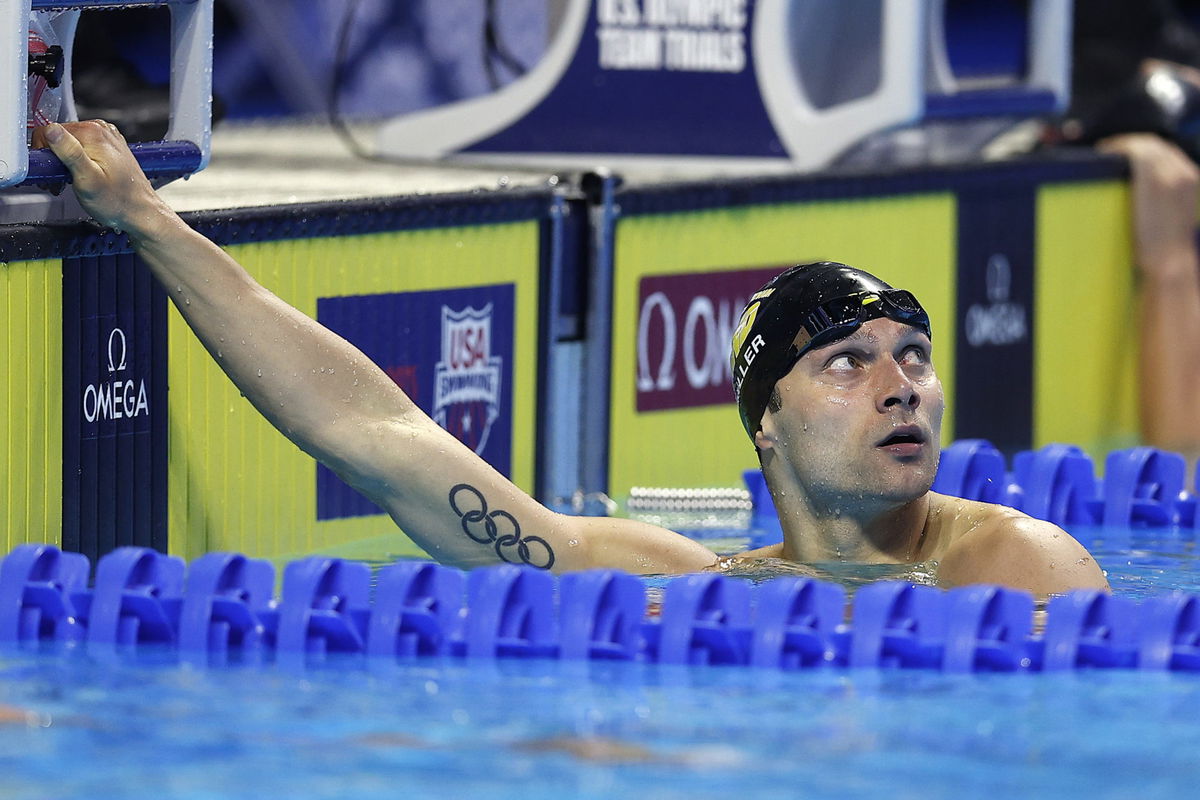
OMAHA, NEBRASKA – JUNE 16: Cody Miller of the United States reacts after competing in a preliminary heat for the Men’s 200m breaststroke during Day Four of the 2021 U.S. Olympic Team Swimming Trials at CHI Health Center on June 16, 2021 in Omaha, Nebraska. (Photo by Maddie Meyer/Getty Images)
Getty
OMAHA, NEBRASKA – JUNE 16: Cody Miller of the United States reacts after competing in a preliminary heat for the Men’s 200m breaststroke during Day Four of the 2021 U.S. Olympic Team Swimming Trials at CHI Health Center on June 16, 2021 in Omaha, Nebraska. (Photo by Maddie Meyer/Getty Images)
When two-time Olympic medalist Cody Miller announced he was going to compete in the Enhanced Games, the swimming world was stunned. Within days, the International Ice Swimming Association (IISA) took immediate action: Miller’s membership was revoked, and he was suspended from all future IISA-approved events.


In its official statement, IISA made it clear that the suspension was not a personal attack on Miller, who’d been testing out the ice swimming waters. “As IISA continues to grow and expand worldwide, issues concerning athlete safety, integrity, and fairness have become increasingly crucial… This decision is neither a moral nor a personal judgment against the athlete. Instead, it reflects IISA’s firm stance on maintaining the integrity of our sport.”
Watch What’s Trending Now!
Along with it, they promised to revise its rules to prevent any athlete who competes in or commits to the Enhanced Games from competing in IISA events. IISA positioned the decision as a long-term effort to protect the integrity of ice swimming as the sport grows.
“Safety is also a consideration, though it is not the primary factor in our decision. Currently, there is limited knowledge about the effects of enhanced substances on athlete safety, particularly in the extreme physiological conditions associated with ice swimming.”
“For the safety of our athletes and the integrity of ice swimming,” finished the statement. Ice swimming is a niche but demanding sport where athletes swim in water colder than 5°C without wetsuits. But with its governing body trying to make ice swimming a future Olympic sport, there’s no room for leniency when it comes to the use of performance enhancing substances.

Getty
OMAHA, NEBRASKA – JUNE 16: Cody Miller of the United States reacts after competing in a preliminary heat for the Men’s 200m breaststroke during Day Four of the 2021 U.S. Olympic Team Swimming Trials at CHI Health Center on June 16, 2021 in Omaha, Nebraska. (Photo by Maddie Meyer/Getty Images)
Miller, by contrast, built his career in regular swimming, which is governed by World Aquatics. He retired from elite competition in late 2024 after a career that included Olympic gold in the 4x100m medley relay and bronze in the 100m breaststroke at the 2016 Rio Olympics. At first glance, it might seem that an IISA ban would have little impact on a retired pool swimmer. But Miller is not an outsider to ice swimming.
In early 2025, Cody Miller competed in the inaugural Minnesota Ice Swim. It was an event that openly stated it was on the path to becoming the first IISA-sanctioned ice swimming competition in the United States. There, Miller delivered strong performances, winning the 25-meter freestyle in 12.60 seconds and the 50-meter freestyle in 28.25 seconds.
But the IISA aligns itself closely with World Aquatics and the Olympic Code of Conduct, both of which are built on principles of clean and fair competition.
Even in June, World Aquatics banned all Enhanced Games participants from its events. In retaliation, Enhanced Games filed an $800 million lawsuit against the global governing body, a case that was later dismissed by a federal judge in New York. Ice swimming, which hopes to one day be recognized as a Winter Olympic sport, is following the same ethical framework.
Still, one question lingers. Why would a highly respected swimmer like Miller, who even said in July he’d never join the Enhanced Games, choose to join such competition now?
The personal reasons behind Cody Miller’s Enhanced Games decision
December 14 was the day Cody Miller announced he would become the second American swimmer, after Megan Romano, to join the Enhanced Games for its debut in 2026. Soon after, Miller publicly explained why he made a decision that surprised so many in the swimming world.
For Miller, the biggest priority is health and longevity. He has spoken openly about losing his father at the age of 60, just months before the 2016 Olympics. That loss changed how he views his own life and career. His goal now is simple: to stay healthy and present for his children for as long as possible. He believes the Enhanced Games’ medically supervised approach gives him more knowledge and monitoring of his body than he ever had during his Olympic years.
As Miller says, “Athletes in our sport deserve to be treated like true professionals. That starts with prioritizing safety and well-being, and I’m confident Enhanced’s transparent, medically supported system does exactly that. I believe in their vision: to give athletes the best support in the world.” In his view, the danger people associate with the Enhanced Games comes from misunderstanding.
Miller has already gone through the medical testing and screenings that have given him a “greater understanding of what’s actually happening in my body right now than I ever have before.”
The second reason is money, and Miller is unusually honest about it. Competitive swimming has never paid highly, even at the Olympic level. Despite winning two medals in Rio, Miller earned less than $100,000. And as we know, the Enhanced Games offer something traditional swimming does not: real financial security. “They’re paying me a lot of money, I have no shame in saying that,” he said
With the prize money going up to $500,000 and $1 million or more if WRs are smashed, Cody Miller considers it a unique opportunity for swimmers to be paid like pros.
The third motive is curiosity and the spirit of adventure. Miller has already dabbled in non-traditional forms of swimming. For him, the Enhanced Games are just a different iteration of the sport, not a substitute for Olympic swimming, but a separate track entirely. “Enhanced Games is a different thing with a different set of rules,” he said.
Cody Miller has been clear that he is done with World Aquatics and USA Swimming. He no longer trains under those systems, holds no contracts, and has no institutional ties. At the same time, he insists that clean sport at the Olympic level should remain exactly as it is. Different competitions, different rules.