More on French Open
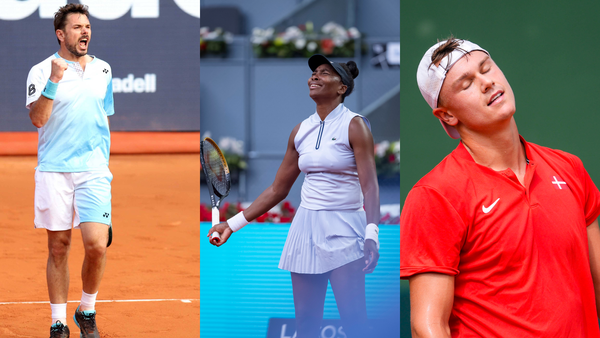
French Open 2026: Stan Wawrinka Gets Wildcard, Venus Williams Misses Out, Holger Rune’s Sad Update and More
Stan Wawrinka awarded a wildcard, Venus Williams excluded, Holger Rune delays return, and latest updates related to the French Open!
“It’s More About Respect”: Jannik Sinner Breaks Silence on Grand Slam Boycott Threat Amid Prize Money Row
Jannik Sinner makes his views clear on Grand Slam boycott talk as he feels Players feel disrespected amid a year-long prize money row.

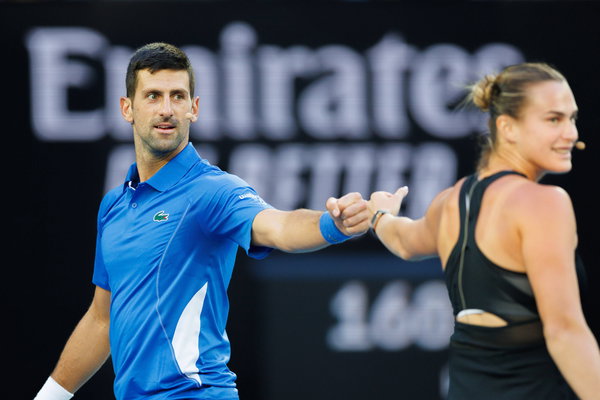
Novak Djokovic Hails Aryna Sabalenka’s “True Leadership” Amid Grand Slam Boycott Talks
Novak Djokovic praises Aryna Sabalenka’s fearless leadership as Grand Slam boycott talks intensify amid growing player frustration!
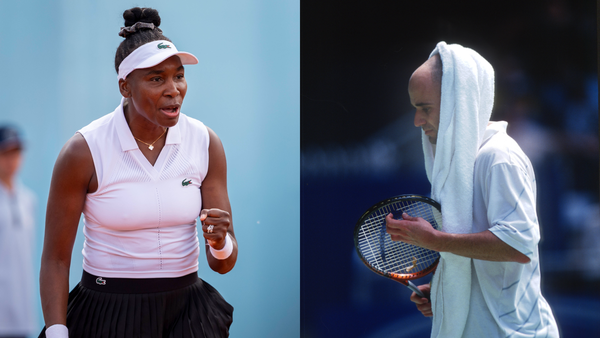
Venus Williams Set to Team Up With Andre Agassi for Special Role at 2026 French Open
Venus Williams joins forces with Andre Agassi for special broadcasting duties at 2026 French Open coverage for TNT.
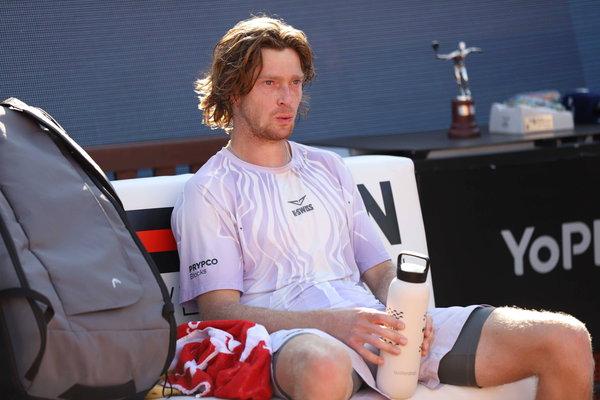
Andrey Rublev Exposes Concerning Reality of Courts in Paris Ahead of Roland Garros
Andrey Rublev exposes alarming concerns surrounding slippery French Open courts ahead of this year’s Roland Garros battle!
Elena Rybakina Skeptical Over French Open Protest Efforts: “Not Once Players Really Came Together”
Elena Rybakina distances herself from French Open protest, declining to back Aryna Sabalenka’s push despite rising tensions!
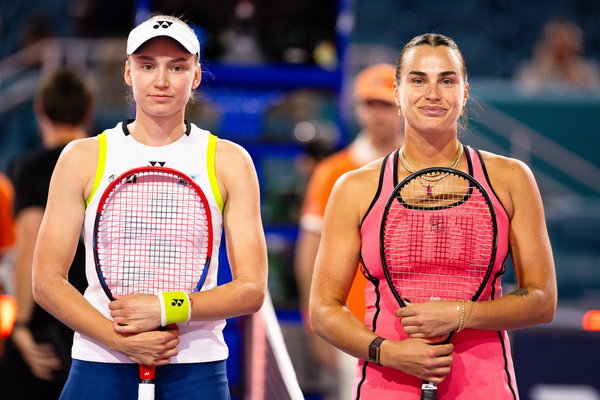
Aryna Sabalenka Threatens to Take Drastic Step as Roland Garros Crisis Triggers Players’ Outrage
Aryna Sabalenka threatens drastic action as Roland Garros prize crisis sparks growing outrage among players!
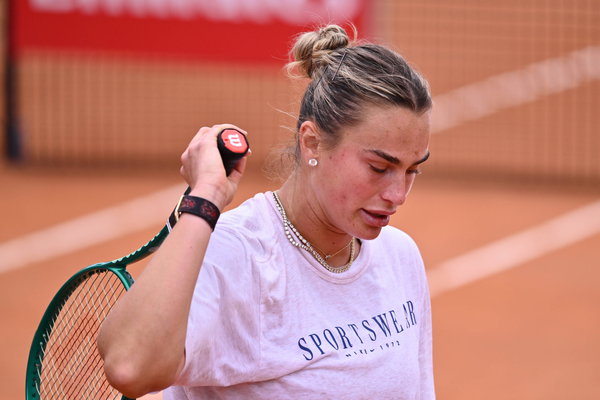
Coco Gauff & Others Urged to Boycott French Open By Ex-US Star Over Prize Money Dispute
Former ATP pro, Sam Querrey believes that the Roland Garros will give in to the players' demands if they decide to boycott the tournament
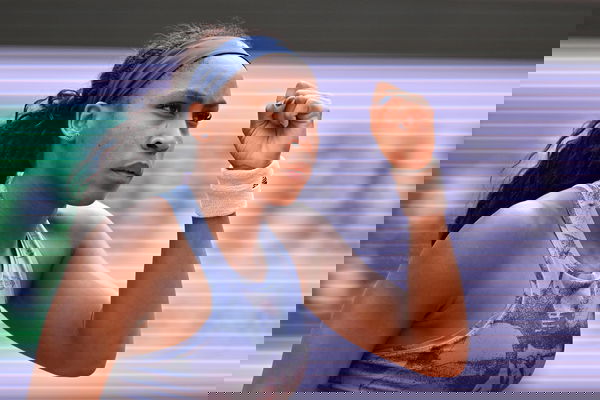
Novak Djokovic, Aryna Sabalenka and Other Top Stars Voice Disappointment Over French Open Prize Money
Novak Djokovic, Aryna Sabalenka and other top players express frustration over French Open prize money concerns!
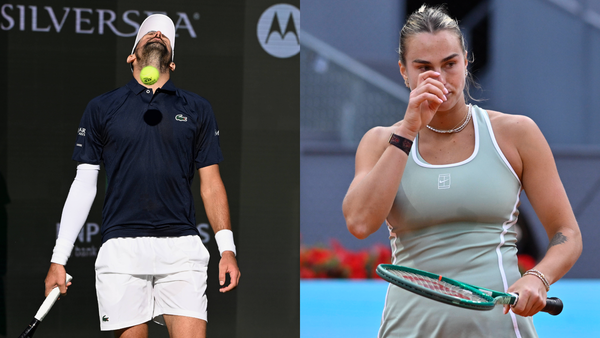
19-Year-Old American Earns First Women’s Wild Card for Roland Garros 2026 Main Draw
Akasha Urhobo, 19-year-old American, earns first women’s wild card spot for Roland Garros 2026 main draw entry!
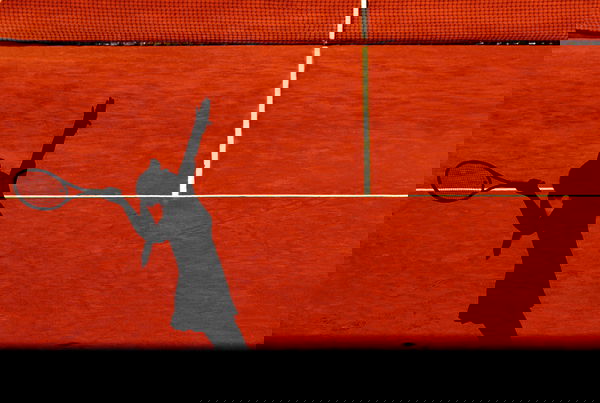
Paula Badosa Headlines Roland Garros Qualifiers List Despite Injury Concerns
The Spaniard has found a place in the qualifier list for the Grand Slam and will now have to fight her way to get to the main draw
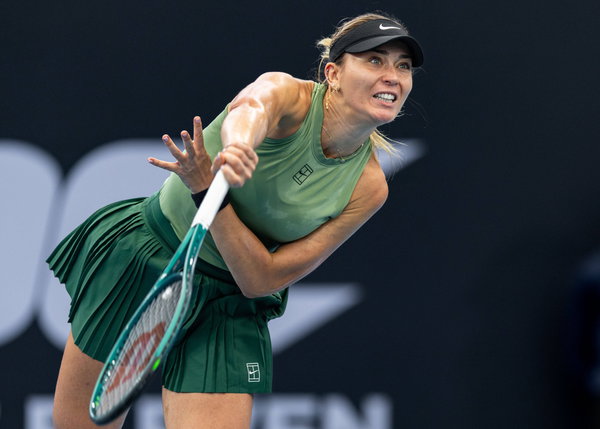
“Really Sad for Him”: Carlos Alcaraz’s French Open Withdrawal Draws Honest Reaction From 15th Ranked Pro
Norwegian star sends heartfelt message for Carlos Alcaraz, after he withdrew from Rome Masters and French Open due to a wrist injury.
About French Open
History and Evolution of the French Open
The French Open - originated in 1891 as the Championnat de France, is a national tennis championship held exclusively for French players or members of French clubs. It marked the beginning of what would become one of the most prestigious tennis tournaments in the world. Since 1928, the French Open has been held annually over two weeks in late May and early June at Stade Roland Garros in Paris. This venue, named after the famed World War 1 aviator hero Roland Garros, provides a dedicated and iconic location for the tournament.
Stade Roland Garros is named in honor of Roland Garros, a pioneering French aviator. This naming reflects the tournament's deep connections to French culture and history.
The women's singles competition was introduced in 1897, expanding the tournament and promoting gender inclusivity in the sport. This addition marked an important step in the evolution of the championship. Mixed doubles were added to the tournament in 1902, followed by women's doubles in 1907. These inclusions further diversified the competition and increased its appeal to a broader range of players and spectators.
The French Open was not held from 1915 to 1919 due to World War I. The hiatus reflected the impact of global events on the tournament, but it resumed in 1920s, continuing its legacy. In 1925, the French Open became an international event, opening its doors to players from around the world. This transformation elevated its status, making it one of the four Grand Slam tournaments and attracting global talent.
The French Open is the second Grand Slam tournament of the year, following the Australian Open and preceding Wimbledon and the US Open. Its timing within the tennis calendar ensures it plays a crucial role in the annual competitive landscape.
Before 1975, the French Open was the only major tournament not played on grass courts. This unique characteristic set it apart and contributed to its distinct identity within the Grand Slam circuit. The transition of other majors to different surfaces further highlighted the French Open's traditional clay courts.
These milestones and developments chart the rich history and evolution of the French Open, showcasing its growth from a national championship to a premier international tennis event with a distinctive character and enduring legacy.
Venues and Locations of French Open
Divergent views exist on the locations of the French Closed Championships, which took place between 1891 and 1924 and served as the model for the current French Open. The book "Tennis: a Cultural History" by Heiner Gillmeister is the source of the information provided here. The competition was limited to French citizens and other athletes holding a license from French tennis associations. All amateur players from all nations were welcome to compete in the French Championships starting in 1925.
The courts of the ÃŽle Puteaux Club hosted the first French Closed Championships in the year 1891. Situated on the island of Puteaux in the Seine, next to Bois de Boulogne, were the club's 10 sand grounds. After that, this place was the ground for Roland Garros in the following years - 1891, 1893, 1894, 1895, 1897, 1902, 1905, 1907.
From 1892 to 1924, the French Open, initially known as the Championnat de France, was held at various prestigious venues in Paris, primarily at the Croix-Catelan grounds of the Racing Club de France. The tournament's early years saw it frequently hosted at these locations, which were central to the development of French tennis during that era.
The Croix-Catelan, part of the Racing Club de France, hosted the French Open intermittently starting in 1892 and then more regularly from 1901 to 1924. Situated in the Bois de Boulogne, this venue offered ample space and a refined atmosphere for the burgeoning tennis competition. Its facilities and the club’s prominence attracted top French players, helping to elevate the status of the tournament within the international tennis community.
Tennis club de Paris known for its well-maintained courts and its role in fostering a strong tennis community in Paris. It hosted the French Open intermittently during these years, specifically in 1896 and from 1897 to 1906, offering a stable and supportive environment for the competition. These years at the Tennis Club de Paris were marked by the participation of the top French players of the time, helping to establish the tournament's reputation and laying the groundwork for its future as an international sporting event.
In 1909, the French Open was held at the Société Athlétique de la Villa Primrose in Bordeaux. This venue was a departure from the usual Parisian locations, marking a unique chapter in the tournament's history.
Since 1928, the French Open has found its permanent home at the Stade Roland Garros in Paris. Named after the French aviator Roland Garros, the stadium was specifically built to host France's defense of the Davis Cup.
Stade Roland Garros features several key courts, with Court Philippe Chatrier serving as the main stadium court. This iconic court, which seats over 15,000 spectators, has seen numerous historic matches and legendary players.
Major Developments in the French Open
In 1927, the French Davis Cup team, led by the "Four Musketeers" (Jean Borotra, Jacques Brugnon, Henri Cochet, and René Lacoste), won the Davis Cup, necessitating the construction of a new stadium to host the following year's defense. Consequently, Stade de Roland Garros was built in 1928, providing a dedicated venue for the French Open and elevating the tournament's stature.
World War II caused significant disruptions to the French Open. The tournament was not officially held from 1940 to 1945, although unofficial editions were played. Post-war, the tournament resumed in 1946, with efforts to rebuild and modernize the facilities, restoring its position in the international tennis calendar.
In 1968, the French Open became the first Grand Slam tournament to embrace the "Open Era," allowing both amateur and professional players to compete. This transition marked a pivotal change in tennis, increasing the tournament's competitiveness and prestige.
In 2007, the French Open introduced equal prize money for men and women, joining the other Grand Slam tournaments in promoting gender equality. This move underscored the tournament's commitment to fairness and was a significant milestone in the history of tennis.
From 2004 to 2008, discussions and plans were initiated to add a retractable roof over Court Philippe Chatrier. This development aimed to ensure uninterrupted play during inclement weather, enhancing the experience for players and spectators alike.
In 2011, the French Tennis Federation initiated a major expansion project for Stade Roland Garros. The project aimed to modernize the facilities, increase capacity, and improve the overall infrastructure to meet the growing demands of the tournament.
The expansion project faced several legal challenges from local residents and environmental groups concerned about the impact on the historic botanical gardens. These challenges delayed progress, but by 2018, most legal obstacles were overcome, allowing the project to advance.
In 2019, Court Simonne-Mathieu was inaugurated. Named after the French tennis legend, this court is uniquely set within the Jardin des Serres d'Auteuil's botanical gardens, providing a stunning and innovative venue that blends sport with nature.
In 2020, floodlights were installed on the main courts, enabling night matches for the first time in the tournament's history. This enhancement allowed for greater scheduling flexibility and improved the viewing experience for global audiences.
These developments reflect the French Open's ongoing evolution, combining respect for tradition with modern innovation to maintain its status as a premier event in the world of tennis.
Tournament Structure of the French Open and Challenges Faced by Players
The French Open is traditionally held in late May and early June, marking the end of the spring clay court season. This timing situates it after the hard court and before the grass court seasons, creating a distinct preparation period for players who must adapt to the specific demands of clay.
The French Open is widely regarded as the premier clay court tennis championship in the world. It is one of the four Grand Slam tournaments, and its prestige attracts the best players globally, making it a highly competitive and sought-after title.
The clay courts of Roland Garros have unique characteristics that significantly impact gameplay. The surface is slower than grass or hard courts, causing the ball to lose speed and bounce higher. This results in longer rallies and requires players to have excellent stamina, strategic play, and the ability to slide effectively on the court.
The French Open is particularly known for its physically demanding nature, especially in the men's singles competition, which is played as best-of-five sets. The extended match length on the slow clay surface increases the physical and mental strain on players. Endurance, patience, and resilience are crucial for success, as matches can often last several hours, testing the limits of a player's fitness and perseverance.
These elements together make the French Open a unique and challenging tournament, requiring players to excel in specific skills suited to clay courts, alongside maintaining peak physical condition to endure the rigorous demands of the competition.
Trophies and Awards of French Open
Men's Singles: Coupe des Mousquetaires
The men's singles champion at the French Open is awarded the Coupe des Mousquetaires, named in honor of the "Four Musketeers" of French tennis””Jean Borotra, Jacques Brugnon, Henri Cochet, and René Lacoste. This prestigious trophy symbolizes excellence and historical significance in French tennis. It is a silver trophy intricately designed, reflecting the grandeur of winning one of the sport's most challenging tournaments.
Women's Singles: Coupe Suzanne Lenglen
The women's singles champion receives the Coupe Suzanne Lenglen, named after the legendary French tennis player Suzanne Lenglen, who dominated women's tennis in the 1920s. The trophy honors her contributions to the sport and her exceptional talent. It is a beautifully crafted silver cup, embodying the elegance and prestige associated with one of tennis's premier championships.
Custom-Made Silver Replicas for Winners
In addition to the original trophies, both the men's and women's singles champions are given custom-made silver replicas of the Coupe des Mousquetaires and the Coupe Suzanne Lenglen, respectively. These replicas allow the winners to keep a piece of their victory while the original trophies remain at Stade Roland Garros. The replicas are finely crafted to mirror the original designs, serving as a lasting memento of the champions' remarkable achievements.
These trophies and awards are not just symbols of victory but also celebrate the rich history and tradition of the French Open, honoring past legends while recognizing current champions.
French Open Prize money 2024
The 2024 French Open Prize money has been revealed, and it has increased by 7.82% from 2023 to an all-time high of ‚¬53,478,000.
The winners of the men's and women's divisions will receive a cheque for ‚¬2,400,000, which is 4.35% more than what Novak Djokovic and Iga Swiatek took home after winning the titles the previous year.
The runner-up will also be happy to get a healthy ‚¬1,200,000 in their bank account, which is a rise of 4.35% from a year earlier.
The majority of the increased prize money has gone towards qualifying; for instance, losers in the first qualifying round will receive ‚¬20,000, which is a 25% increase from a year earlier.
Men’s and Women’s Singles
| Champion | $2,563,788 | ‚¬2,400,000 |
| Runner Up | $1,281,786 | ‚¬1176436.14 |
| Semifinalist | $694,300.75 | ‚¬650,000 |
| Quarterfinalist | $443,284.32 | ‚¬415,000 |
| Fourth Round | $267,038.75 | ‚¬250,000 |
| Third Round | $168,768.49 | ‚¬158,000 |
| Second Round | $117,497.05 | ‚¬110,000 |
| First Round | $77,966.19 | ‚¬73,000 |
Men's & Women's Doubles Prize Money
| Result | Prize Money (per pair) | Prize Money in USD |
| Champion | ‚¬590,000 | $642775.50 |
| Finalist | ‚¬295,000 | $321387.75 |
| SF | ‚¬148,000 | $160813.84 |
| QF | ‚¬80,000 | $86926.40 |
| R3 | ‚¬43,500 | $47266.23 |
| R2 | ‚¬27,500 | $29880.95 |
| R1 | ‚¬17,500 | $19015.15 |
Mixed Doubles
| Winner | ‚¬122,000 | $130,492 | 0.00% |
| Runner-up | ‚¬61,000 | $65,246 | 0.00% |
| Semifinal | ‚¬31,000 | $33,158 | 0.00% |
| Quarterfinal | ‚¬17,500 | $18,718 | 0.00% |
| Round 2 | ‚¬10,000 | $10,696 | 0.00% |
| Round 1 | ‚¬5,000 | $5,348 | 0.00% |
Men’s and Women’s Wheelchair Singles
The prize money for quad wheelchairs is the same, but the draw is smaller””there are only eight players in the singles and four pairs in the doubles””and the competition ends in the quarterfinals and semifinals, respectively.
| Winner | ‚¬62,000 | $66,347 | 3.33% |
| Runner-up | ‚¬31,000 | $33,174 | 3.33% |
| Semifinal | ‚¬20,000 | $21,402 | 11.11% |
| Quarterfinal | ‚¬12,000 | $12,841 | 9.09% |
| Round 1 | ‚¬8,500 | $9,096 | 6.25% |
Men’s and Women’s Wheelchair Doubles
| Winner | ‚¬21,000 | $22,790 | 5.00% |
| Runner-up | ‚¬11,000 | $11,938 | 10.00% |
| Semifinal | ‚¬8,000 | $8,682 | 14.29% |
| Quarterfinal | ‚¬5,000 | $5,426 | 0.00% |